
WHAT ARE THE HAZARDS FOR WORKERS ASSOCIATED WITH LEAD, SILICA, COVID 19 AND ASBESTOS?
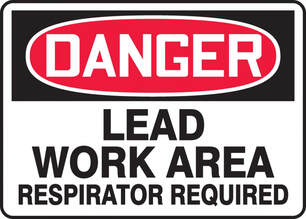
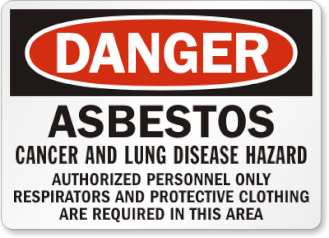
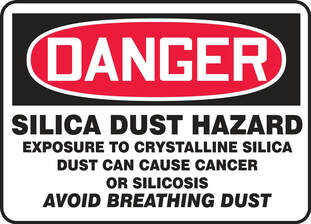
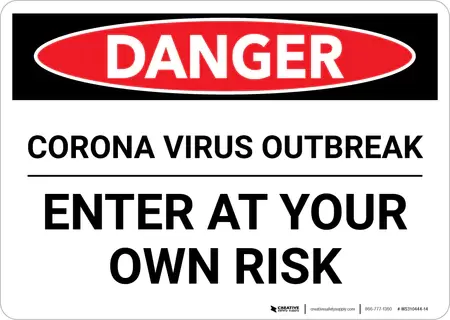
LEAD Lead may affect the health of workers if it is in a form that may be inhaled (i.e. airborne particles) or ingested. In order for lead to be a hazard by inhalation, lead particles that are small enough to be inhaled must get into the air. There are three types of particles: dust, fume and mist. Lead dust consists of solid particles created through processes such as blasting, sanding, grinding, and electric or pneumatic cutting. Lead fumes are produced when lead or lead-contaminated materials are heated to temperatures above 500°C, such as welding, high temperature cutting, and burning operations. The heating causes a vapor to be given off and the vapor condenses into solid fume particles. Mists are made up of liquid droplets suspended in air. The spray application of lead-based paint can generate a high concentration of lead-containing mist. SILICA Silica is one of the most common hazards on a worksite, particularly in the construction, oil and gas, manufacturing, and agriculture industries. Silica dust can cause silicosis, a serious and irreversible lung disease. It can also cause lung cancer. As workers breathe in the dust the silica settles in their lungs. ASBESTOS Asbestos fibers are easily inhaled and carried into the lower regions of the lung where they can cause fibrotic lung disease (asbestosis) and changes in the lining of the chest cavity (pleura). These diseases can lead to reduced respiratory function and death. Long-term inhalation of asbestos fibers also increases the risk of lung cancer and mesothelioma. Enlargement of the heart can also occur as an indirect effect from the increased resistance of blood flow through the lungs. COVID-19 COVID-19 is caused by infection with the severe acute respiratory syndrome coronavirus 2 (SARS-CoV-2) virus strain. Worker risk of occupational exposure to COVID 19 during the pandemic may vary from community to community, depending on local conditions or outbreaks. Exposure risk depends in part on the physical environment of the workplace, the type of work activity, the health status of the worker, the ability of workers to wear face coverings and abide by BC CDC guidelines, and the need for close contact (within 6 feet for a total of 15 minutes or more over a 24-hour period) with other people, including those known to have or suspected of having COVID 19, and those who may be infected with—and able to spread—SARS-CoV-2 without knowing it. Other factors, such as conditions in communities where employees live and work, their activities outside of work, and individual health conditions, may also affect workers’ risk of getting COVID-19 and/or developing complications from the illness. WHERE CAN YOU PURCHASE SILICA, LEAD, COVID 19 OR ASBESTOS EXPOSURE CONTROL PLAN TEMPLATES? Currently the following ECP templates are the bestselling in BC and are approved by WorkSafeBC Standards. Click on the following links to view: SILICA EXPOSURE CONTROL PLAN TEMPLATE BC LEAD EXPOSURE CONTROL PLAN TEMPLATE BC ASBESTOS EXPOSURE CONTROL PLAN TEMPLATE BC COVID 19 EXPOSURE CONTROL PLAN TEMPLATE BC WHAT ARE EMPLOYER RESPONSIBILITIES WHEN IT COMES TO EXPOSURE CONTROL PLANS? Section 6.4 of the WorkSafe BC Regulations state If a worker is or may be exposed to potentially harmful levels of asbestos, the employer must develop and implement an exposure control plan meeting the requirements of section 5.54 and to ensure adequate coordination of the overall plan, the employer must ensure that it is administered by a properly trained person. Sections 5.54 of the WorkSafeBC Regulations states: An exposure control plan must be implemented when: (a) exposure monitoring under section 5.53(3) indicates that a worker is or may be exposed to an air contaminant in excess of 50% of its exposure limit, (b) measurement is not possible at 50% of the applicable exposure limit, or (c) otherwise required by this Regulation. (2) The exposure control plan must incorporate the following elements: (a) a statement of purpose and responsibilities; (b) risk identification, assessment and control; (c) education and training; (d) written work procedures, when required; (e) hygiene facilities and decontamination procedures, when required; (f) health monitoring, when required; (g) documentation, when required. (3) The plan must be reviewed at least annually and updated as necessary by the employer, in consultation with the joint committee or the worker health and safety representative, as applicable. WHAT ARE EXPOSURE CONTROL PLANS? An Exposure Control Plan or known as ECP is a document on particular hazardous substances that provides direction and expectations to prevent exposures to workers. Depending on where you operate, your regulatory authority in BC may require you to have one or more exposure control plans. If an employer fails to develop and implement an exposure control plan, orders by WorkSafeBC can be issued to the employer to motivate action and compliance and with the potential for a stop work order. Occupational health statistics indicate that more than 50% of all fatalities in Alberta and BC are due to occupational disease. In 2015, WorkSafeBC stats indicated that there were 122 deaths due to occupational disease and 72 were due to worksite exposures. Overall, there is a trend for more claims for occupational disease/illnesses being recognized and accepted by workers compensation boards. Exposure Control Plan’s are meant to control the hazards and eliminate or mitigate the risks associated with potential exposure. Regulators want to see that prevention from occupational disease is being taken seriously and included in health and safety management systems. More than 50% of all fatalities in AB and BC are attributed to occupational disease. In 2015, out of 122 occupational disease deaths 72 were due to worksite exposures (WorkSafeBC 2015). The purpose of an Exposure Control Plan is to detail:
WHO CAN DEVELOP AN EXPOSURE CONTROL PLAN? A qualified person from the employers side may develop an ECP. Qualified means this person either has the years of experience working with the hazardous substance or has the education credentials to do so. WHAT ELSE DOES AN EMPLOYER HAVE TO DO AFTER AN ECP HAS BEEN DEVELOPED? After developing and implementing your Exposure Control Plan, employers must make sure that the controls are effective:
5 Comments
 All businesses in Canada are required by law to have a written occupational health and safety program developed and implemented for their work-site(s). Failure to do so could result in your company receiving fines, penalties, sanctions or stop word orders. Employers in Canada are responsible for providing their workers the information, instruction, training and supervision necessary to ensure the health and safety of those workers in carrying out their work and to ensure the health and safety of other workers at the workplace. Before we start the development of your health and safety program manual, we will always first determine the nature of your business. From there, we are then able to develop your business a company specific OHS safety program manual which will entail the correct policies and procedures pertinent to the type of work your company preforms. We can develop, audit and upgrade written occupational health and safety programs, plans and manuals for the following provinces in Canada OCCUPATIONAL HEALTH AND SAFETY PROGRAMS VANCOUVER BRITISH COLUMBIA BC OCCUPATIONAL HEALTH AND SAFETY PROGRAMS EDMONTON ALBERTA OCCUPATIONAL HEALTH AND SAFETY PROGRAMS CALGARY ALBERTA OCCUPATIONAL HEALTH AND SAFETY PROGRAMS SASKATOON REGINA SASKATCHEWAN OCCUPATIONAL HEALTH AND SAFETY PROGRAMS WINNIPEG MANITOBA OCCUPATIONAL HEALTH AND SAFETY PROGRAMS TORONTO ONTARIO OCCUPATIONAL HEALTH AND SAFETY PROGRAMS OTTAWA ONTARIO OCCUPATIONAL HEALTH AND SAFETY PROGRAMS MISSISSAUGA ONTARIO OCCUPATIONAL HEALTH AND SAFETY PROGRAMS HALIFAX NOVA SCOTIA OCCUPATIONAL HEALTH AND SAFETY PROGRAMS ST. JOHNS MONCTON NEW BRUNSWICK OCCUPATIONAL HEALTH AND SAFETY PROGRAMS NEWFOUNDLAND & LABRADOR Greystone Safety Services also offers safety equipment and supplies for businesses throughout Canada. 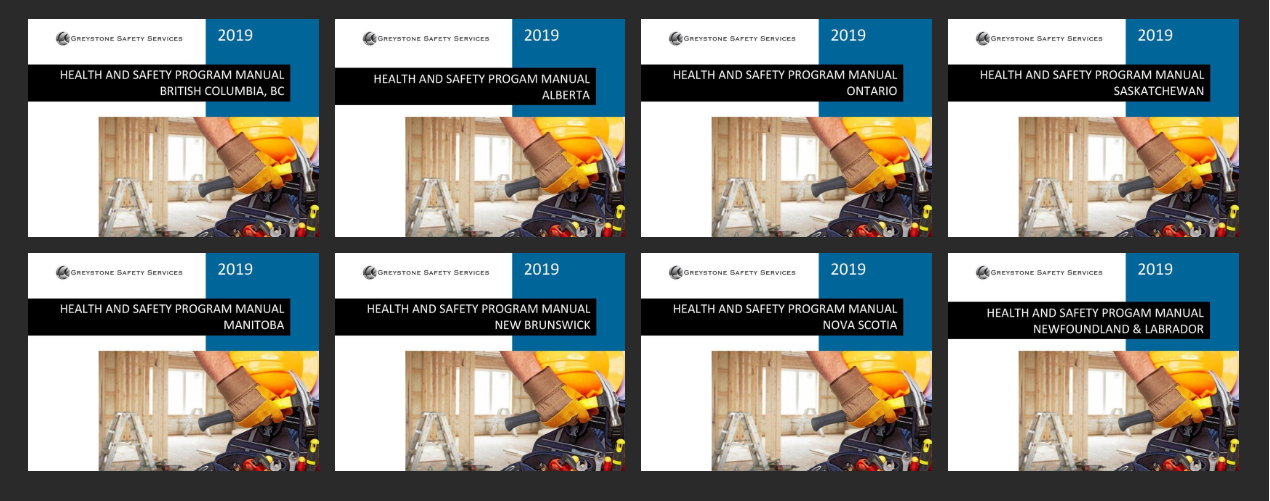 Greystone Safety Services is a complete occupational health and safety consulting company located in Vancouver, BC Canada. We provide businesses and employers with services, such as:
Written OHS Health and Safety Programs and Manuals Development Written OHS Health and Safety Programs and Manuals Upgrades and Conversions Health and Safety Program OHS Audits, Auditing and Site Safety Inspections (Risk Assessments) Health and Safety Training Certification Courses WorkSafeBC Legislative and Regulations Compliance We can develop, audit and upgrade written occupational health and safety programs, plans and manuals for the following provinces and health and safety regulations in Canada: Vancouver British Columbia BC, Edmonton Alberta, Calgary Alberta, Saskatoon Saskatchewan, Winnipeg Manitoba, Toronto Ontario, Ottawa Ontario, WorksafeBC, Alberta OHS Act, Regulation And Code, Safework Manitoba, Worksafe Saskatchewan, Health And Safety - Ministry Of Labour Ontario Greystone Safety Services has built a reputation for providing quality driven health and safety consulting, safety training courses and worksafebc regulation compliant health and safety programs manuals. After years of hard work, we are the leading provider of industrial safety training courses, safety consulting, safety consultants, site safety inspections audits and worksafebc compliance in Vancouver BC, Victoria BC and the rest of Western BC. Our goal is to provide you with the most up to date safety consulting services available in all aspects of everyday workplace safety processes. Greystone Safety Services offers their clients a variety of health and safety training certification courses in Vancouver, BC, Canada. All our safety training courses are conducted directly at our client’s worksite – we come to you. The length of each training session varies depending on the course topic and the needs of the participants. Our safety training courses can range from 4 hours to 8 hours per course. Joint Health and Safety Committee JOSH Training Certification Course in Vancouver BC Bullying and Harassment Training Certification Course in Vancouver BC Confined Space Entry Rescue Training Certification Course in Vancouver BC Accident Incident Investigations Training Certification Course in Vancouver BC Fall Protection Arrest Restraint Training Certification Course in Vancouver BC Lock Out Tag Out Training Certification Course in Vancouver BC Asbestos Awareness Training Certification Course in Vancouver BC WHMIS 2015 Training Certification Course in Vancouver BC Greystone Safety Services Provides Occupational Health and Safety Consulting, OHS Safety Consultants, OHS Safety Programs & Manuals Development, OHS Safety Programs & Manuals Upgrades - Conversions, OHS Safety Program Audits and Auditing, OHS Site Safety Inspections & Risk Assessments, WorkSafeBC Regulations Compliance and OHS Safety Training Certification Courses across British Columbia, BC, Canada: Vancouver, North Vancouver, West Vancouver, East Vancouver, Burnaby, New Westminster, Richmond, Surrey, Delta, Langley, Fort Langley, Maple Ridge, Coquitlam, Port Coquitlam, Port Moody, Pitt Meadows, Mission, Abbotsford, Victoria, Nanaimo and Langford, British Columbia, BC, Canada for over 20 years. Contact Us for More Information on our Health and Safety Consulting Services Vancouver, BC, Canada: (604) 259-8020 info@greystonesafety.com  Greystone Safety Services is a professional occupational health and safety consulting company in BC British Columbia. Greystone Safety Service’s occupational health and safety consultants, safety consultants and OHS consultants offer a wide variety of health and safety consulting services to clients across BC British Columbia, Vancouver BC, Surrey BC, Langley BC, Burnaby BC, Richmond BC, Delta BC and Victoria, BC; such as:
Health and Safety Consulting Services BC British Columbia, Vancouver BC, Surrey BC, Langley BC, Burnaby BC, Richmond BC, Delta BC and Victoria, BC Health and Safety Programs Development BC British Columbia, Vancouver BC, Surrey BC, Langley BC, Burnaby BC, Richmond BC, Delta BC and Victoria, BC Health and Safety Audits BC British Columbia, Vancouver BC, Surrey BC, Langley BC, Burnaby BC, Richmond BC, Delta BC and Victoria, BC WorkSafeBC and Safe Work BC Compliance BC British Columbia, Vancouver BC, Surrey BC, Langley BC, Burnaby BC, Richmond BC, Delta BC and Victoria, BC Greystone Safety Services offers a wide variety of safety training courses BC and safety certification courses BC across BC British Columbia in the following areas, Vancouver BC, Surrey BC, Langley BC, Burnaby BC, Richmond BC, Delta BC and Victoria, BC: Fork Lift Truck Training BC, BC British Columbia, Vancouver BC, Surrey BC, Langley BC, Burnaby BC, Richmond BC, Delta BC and Victoria, BC Asbestos Awareness Training BC, BC British Columbia, Vancouver BC, Surrey BC, Langley BC, Burnaby BC, Richmond BC, Delta BC and Victoria, BC Lock Out Tag Out Training BC, BC British Columbia, Vancouver BC, Surrey BC, Langley BC, Burnaby BC, Richmond BC, Delta BC and Victoria, BC Man Lift Boom Lift Training BC, BC British Columbia, Vancouver BC, Surrey BC, Langley BC, Burnaby BC, Richmond BC, Delta BC and Victoria, BC WHMIS 2015 GHS Training BC, BC British Columbia, Vancouver BC, Surrey BC, Langley BC, Burnaby BC, Richmond BC, Delta BC and Victoria, BC Transportation of Dangerous Goods (TDG) Training BC, BC British Columbia, Vancouver BC, Surrey BC, Langley BC, Burnaby BC, Richmond BC, Delta BC and Victoria, BC Fall Protection Training BC, BC British Columbia, Vancouver BC, Surrey BC, Langley BC, Burnaby BC, Richmond BC, Delta BC and Victoria, BC Confined Space Entry Training BC, BC British Columbia, Vancouver BC, Surrey BC, Langley BC, Burnaby BC, Richmond BC, Delta BC and Victoria, BC Accident Incident Investigations Training BC, BC British Columbia, Vancouver BC, Surrey BC, Langley BC, Burnaby BC, Richmond BC, Delta BC and Victoria, BC Bullying and Harassment Training BC, BC British Columbia, Vancouver BC, Surrey BC, Langley BC, Burnaby BC, Richmond BC, Delta BC and Victoria, BC Joint Health and Safety Committee Training JOSH Committee Training, BC, BC British Columbia, Vancouver BC, Surrey BC, Langley BC, Burnaby BC, Richmond BC, Delta BC and Victoria, BC Workplace Site Safety Inspections Training BC, BC British Columbia, Vancouver BC, Surrey BC, Langley BC, Burnaby BC, Richmond BC, Delta BC and Victoria, BC Contact Greystone Safety Services for more information on our occupational health and safety consulting services, health and safety consulting, health and safety consultant, health and safety training, health and safety programs development, health and safety audits, health and safety inspections, OHS safety consulting, OHS safety consultants, OHS safety audits, OHS safety inspections, OHS safety program development, worksafebc safe work BC compliance in BC British Columbia, Vancouver BC, Surrey BC, Langley BC, Burnaby BC, Richmond BC, Delta BC and Victoria, BC. Greystone Safety Services has Been Providing Health and Safety Consulting, OHS Safety Programs, OHS Safety Audits, OHS Safety Inspections, WorkSafeBC Compliance and OHS Safety Training Courses in BC: Victoria (Vancouver Island), Vancouver, North Vancouver, West Vancouver, Burnaby, New Westminster, Richmond, Surrey, Langley, Fort Langley, Maple Ridge, Coquitlam, Port Coquitlam, Port Moody, Pitt Meadows, & Abbotsford, British Columbia (BC) for over 20 years. Vancouver, BC Lower Mainland, BC: (604) 259-8020 Victoria, BC Vancouver Island, BC: (250) 999-9380 Email: info@greystonesafety.com Greystone Safety Services is a professional occupational health and safety consulting company in BC British Columbia. Greystone Safety Service’s occupational health and safety consultants, safety consultants and OHS consultants offer a wide variety of health and safety consulting services to clients across BC British Columbia, Vancouver BC, Surrey BC, Langley BC, Burnaby BC, Richmond BC, Delta BC and Victoria, BC; such as:
Health and Safety Consulting Services BC British Columbia, Vancouver BC, Surrey BC, Langley BC, Burnaby BC, Richmond BC, Delta BC and Victoria, BC Health and Safety Programs Development BC British Columbia, Vancouver BC, Surrey BC, Langley BC, Burnaby BC, Richmond BC, Delta BC and Victoria, BC Health and Safety Audits BC British Columbia, Vancouver BC, Surrey BC, Langley BC, Burnaby BC, Richmond BC, Delta BC and Victoria, BC WorkSafeBC and Safe Work BC Compliance BC British Columbia, Vancouver BC, Surrey BC, Langley BC, Burnaby BC, Richmond BC, Delta BC and Victoria, BC Greystone Safety Services offers a wide variety of safety training courses BC and safety certification courses BC across BC British Columbia in the following areas, Vancouver BC, Surrey BC, Langley BC, Burnaby BC, Richmond BC, Delta BC and Victoria, BC: Fork Lift Truck Training BC, BC British Columbia, Vancouver BC, Surrey BC, Langley BC, Burnaby BC, Richmond BC, Delta BC and Victoria, BC Asbestos Awareness Training BC, BC British Columbia, Vancouver BC, Surrey BC, Langley BC, Burnaby BC, Richmond BC, Delta BC and Victoria, BC Lock Out Tag Out Training BC, BC British Columbia, Vancouver BC, Surrey BC, Langley BC, Burnaby BC, Richmond BC, Delta BC and Victoria, BC Man Lift Boom Lift Training BC, BC British Columbia, Vancouver BC, Surrey BC, Langley BC, Burnaby BC, Richmond BC, Delta BC and Victoria, BC WHMIS 2015 GHS Training BC, BC British Columbia, Vancouver BC, Surrey BC, Langley BC, Burnaby BC, Richmond BC, Delta BC and Victoria, BC Transportation of Dangerous Goods (TDG) Training BC, BC British Columbia, Vancouver BC, Surrey BC, Langley BC, Burnaby BC, Richmond BC, Delta BC and Victoria, BC Fall Protection Training BC, BC British Columbia, Vancouver BC, Surrey BC, Langley BC, Burnaby BC, Richmond BC, Delta BC and Victoria, BC Confined Space Entry Training BC, BC British Columbia, Vancouver BC, Surrey BC, Langley BC, Burnaby BC, Richmond BC, Delta BC and Victoria, BC Accident Incident Investigations Training BC, BC British Columbia, Vancouver BC, Surrey BC, Langley BC, Burnaby BC, Richmond BC, Delta BC and Victoria, BC Respiratory Protection & PPE Training BC, BC British Columbia, Vancouver BC, Surrey BC, Langley BC, Burnaby BC, Richmond BC, Delta BC and Victoria, BC Workplace Site Safety Inspections Training BC, BC British Columbia, Vancouver BC, Surrey BC, Langley BC, Burnaby BC, Richmond BC, Delta BC and Victoria, BC Contact Greystone Safety Services for more information on our occupational health and safety consulting services, health and safety consulting, health and safety consultant, health and safety training, health and safety programs development, health and safety audits, health and safety inspections, OHS safety consulting, OHS safety consultants, OHS safety audits, OHS safety inspections, OHS safety program development, worksafebc safe work BC compliance in BC British Columbia, Vancouver BC, Surrey BC, Langley BC, Burnaby BC, Richmond BC, Delta BC and Victoria, BC. Greystone Safety Services has Been Providing Health and Safety Consulting, OHS Safety Programs, OHS Safety Audits, OHS Safety Inspections, WorkSafeBC Compliance and OHS Safety Training Courses in BC: Victoria (Vancouver Island), Vancouver, North Vancouver, West Vancouver, Burnaby, New Westminster, Richmond, Surrey, Langley, Fort Langley, Maple Ridge, Coquitlam, Port Coquitlam, Port Moody, Pitt Meadows, & Abbotsford, British Columbia (BC) for over 20 years. Vancouver Lower Mainland, BC: (604) 259-8020 Victoria Vancouver Island, BC: (250) 999-9380 Email: info@greystonesafety.com We don't just sell safety manuals, we develop safety programs specific to your companies needs. An effective health and safety program not only prevents injuries and accidents in the workplace but also assists in achieving compliance with WorkSafeBC regulations. Our certified and highly educated health and safety professionals will provide businesses of all sizes, and from any industry, with professionally developed occupational health and safety programs. We are fully committed to ensuring our written safety programs are in full compliance with WorkSafeBC legislation and federal legislation. Our services will start off with a full-detailed safety audit of your job site(s) to determine the scope of your needs and from there the development of your customized written health and safety program begins!
Once complete, our professionals will take the time to educate our clients on how to effectively implement their health and safety program in the workplace. According to the Workers Compensation Act and the Occupational Health and Safety Regulation, it’s the employer’s responsibility to implement an occupational health and safety (OHS) program to prevent employee workplace injury and disease. OHS programs in British Columbia must meet certain safety standards. The employer must exercise due diligence in taking steps to meet those standards. You must have a 'formal' health and safety program if you have either a workforce of 20 or more workers and at least one workplace where there is a moderate or high risk of injury and when you have a workforce of 50 or more workers. Small businesses or employers with fewer than 20 workers need a health and safety program too. These programs can be simpler. We refer to them as "informal" health and safety programs. Greystone Safety Services provides health and safety consulting, health and safety training and health and safety programs in all of BC. Contact us to find out more about our services. Greystone Safety Services offers ohs health and safety consulting, osh safety consultant, ohs safety program development, safety training courses and safety audits in BC, British Columbia, Vancouver, Surrey, Langley, Delta, Victoria, Burnaby and Richmond. Greystone Safety Services is a professional occupational health and safety consulting company in BC British Columbia. Greystone Safety Service’s occupational health and safety consultants, safety consultants and OHS consultants offer a wide variety of health and safety consulting services to clients across BC British Columbia, Vancouver BC, Surrey BC, Langley BC, Burnaby BC, Richmond BC, Delta BC and Victoria, BC; such as:
Health and Safety Consulting Services BC British Columbia, Vancouver BC, Surrey BC, Langley BC, Burnaby BC, Richmond BC, Delta BC and Victoria, BC Health and Safety Programs Development BC British Columbia, Vancouver BC, Surrey BC, Langley BC, Burnaby BC, Richmond BC, Delta BC and Victoria, BC Health and Safety Audits BC British Columbia, Vancouver BC, Surrey BC, Langley BC, Burnaby BC, Richmond BC, Delta BC and Victoria, BC WorkSafeBC and Safe Work BC Compliance BC British Columbia, Vancouver BC, Surrey BC, Langley BC, Burnaby BC, Richmond BC, Delta BC and Victoria, BC Greystone Safety Services offers a wide variety of safety training courses BC and safety certification courses BC across BC British Columbia in the following areas, Vancouver BC, Surrey BC, Langley BC, Burnaby BC, Richmond BC, Delta BC and Victoria, BC: Fork Lift Truck Training BC, BC British Columbia, Vancouver BC, Surrey BC, Langley BC, Burnaby BC, Richmond BC, Delta BC and Victoria, BC Asbestos Awareness Training BC, BC British Columbia, Vancouver BC, Surrey BC, Langley BC, Burnaby BC, Richmond BC, Delta BC and Victoria, BC Lock Out Tag Out Training BC, BC British Columbia, Vancouver BC, Surrey BC, Langley BC, Burnaby BC, Richmond BC, Delta BC and Victoria, BC Man Lift Boom Lift Training BC, BC British Columbia, Vancouver BC, Surrey BC, Langley BC, Burnaby BC, Richmond BC, Delta BC and Victoria, BC WHMIS 2015 GHS Training BC, BC British Columbia, Vancouver BC, Surrey BC, Langley BC, Burnaby BC, Richmond BC, Delta BC and Victoria, BC Transportation of Dangerous Goods (TDG) Training BC, BC British Columbia, Vancouver BC, Surrey BC, Langley BC, Burnaby BC, Richmond BC, Delta BC and Victoria, BC Fall Protection Training BC, BC British Columbia, Vancouver BC, Surrey BC, Langley BC, Burnaby BC, Richmond BC, Delta BC and Victoria, BC Confined Space Entry Training BC, BC British Columbia, Vancouver BC, Surrey BC, Langley BC, Burnaby BC, Richmond BC, Delta BC and Victoria, BC Accident Incident Investigations Training BC, BC British Columbia, Vancouver BC, Surrey BC, Langley BC, Burnaby BC, Richmond BC, Delta BC and Victoria, BC Respiratory Protection & PPE Training BC, BC British Columbia, Vancouver BC, Surrey BC, Langley BC, Burnaby BC, Richmond BC, Delta BC and Victoria, BC Workplace Site Safety Inspections Training BC, BC British Columbia, Vancouver BC, Surrey BC, Langley BC, Burnaby BC, Richmond BC, Delta BC and Victoria, BC Contact Greystone Safety Services for more information on our occupational health and safety consulting services, health and safety consulting, health and safety consultant, health and safety training, health and safety programs development, health and safety audits, health and safety inspections, OHS safety consulting, OHS safety consultants, OHS safety audits, OHS safety inspections, OHS safety program development, worksafebc safe work BC compliance in BC British Columbia, Vancouver BC, Surrey BC, Langley BC, Burnaby BC, Richmond BC, Delta BC and Victoria, BC. Greystone Safety Services has Been Providing Health and Safety Consulting, OHS Safety Programs, OHS Safety Audits, OHS Safety Inspections, WorkSafeBC Compliance and OHS Safety Training Courses in BC: Victoria (Vancouver Island), Vancouver, North Vancouver, West Vancouver, Burnaby, New Westminster, Richmond, Surrey, Langley, Fort Langley, Maple Ridge, Coquitlam, Port Coquitlam, Port Moody, Pitt Meadows, & Abbotsford, British Columbia (BC) for over 20 years. Vancouver Lower Mainland, BC: (604) 259-8020 Victoria Vancouver Island, BC: (250) 999-9380 Email: info@greystonesafety.com Greystone Safety Services is a professional occupational health and safety consulting company in BC British Columbia. Greystone Safety Service’s occupational health and safety consultants, safety consultants and OHS consultants offer a wide variety of health and safety consulting services to clients across BC British Columbia, Vancouver BC, Surrey BC, Langley BC, Burnaby BC, Richmond BC, Delta BC and Victoria, BC; such as:
Health and Safety Consulting Services Health and Safety Programs Development Health and Safety Audits WorkSafeBC and Safe Work BC Compliance Greystone Safety Services offers a wide variety of safety training courses BC and safety certification courses BC across BC British Columbia in the following areas, Vancouver BC, Surrey BC, Langley BC, Burnaby BC, Richmond BC, Delta BC and Victoria, BC: Fork Lift Truck Training BC Asbestos Awareness Training BC Lock Out Tag Out Training BC Man Lift Boom Lift Training BC WHMIS 2015 GHS Training BC Transportation of Dangerous Goods (TDG) Training BC Fall Protection Training BC Confined Space Entry Training BC Accident Incident Investigations Training BC Respiratory Protection & PPE Training BC Workplace Site Safety Inspections Training BC Contact us for more information on our occupational health and safety consulting services, OHS safety consulting, OHS safety consultants, OHS safety audits, OHS safety inspections, OHS safety programs development, worksafebc safe work BC compliance in BC British Columbia, Vancouver BC, Surrey BC, Langley BC, Burnaby BC, Richmond BC, Delta BC and Victoria, BC. Vancouver Lower Mainland, BC: (604) 259-8020 Victoria Vancouver Island, BC: (250) 999-9380 Email: info@greystonesafety.com Misunderstandings start when there’s no written, signed agreement about safety roles and responsibilities between the owner and prime contractor in BC. Verbal understandings or assumptions made by either the owner or prime contractor can, at best, cause confusion. The prime contractor may assume responsibility for the site’s health and safety program when, in fact, the owner has retained this responsibility. In the worst-case scenario, safety is compromised and workers’ lives are put at risk when prime contractors don’t understand the extent of their health and safety responsibilities. All of this can be avoided by adding an appendix or schedule clause to the contract of work that specifies health and safety duties appointed by the owner to the prime contractor. Without this written agreement, the owner retains responsibility.
IDENTIFY, CORRECT AND ADDRESS HEALTH AND SAFETY HAZARDS Overall, the prime contractor is responsible for identifying and addressing hazards and establishing a comprehensive system of corrective action — from young worker orientation to fall protection programs. The prime contractor is also responsible for having systems in place to ensure two-way communication with subcontractors. Where hazards are specific to the work of a particular subcontractor, however, that contractor is responsible for eliminating or, if that’s not possible, minimizing the risk to workers. Subcontractors should also notify the prime contractor in advance of any work that is likely to create a hazard for a worker or another subcontractor. In the end, it is still the prime contractor’s responsibility to ensure all corrective action is taken and that regular inspections are made to prevent the development of unsafe practices or conditions. COMMUNICATE AND COORDINATE WITH SUBCONTRACTORS Subcontractors have a health and safety role to play in a multiple employer workplace, but the prime contractor must communicate and coordinate with subcontractors in the following ways: • Receiving from each subcontractor on site the names of the qualifi ed persons designated to 1) supervise their workers and 2) be responsible for the subcontractor’s site health and safety activities • Ensuring subcontractors notify the prime contractor in advance of any undertaking likely to create a hazard for a worker of another subcontractor • Communicating any known hazards to all affected subcontractors and workers • Attending site meetings with subcontractors to coordinate safety and ensure compliance with the Workers Compensation Act and the Occupational Health and Safety Regulation. ASSIGN A QUALIFIED HEALTH AND SAFETY COORDINATOR When responsible for health and safety a multiple employer workplace, coordination is essential. While the prime contractor is still responsible for many specific outcomes in a multiple employer workplace, the coordination begins by assigning a qualified health and safety lead who, among other things, is responsible for: • Identifying and setting expectations for each subcontractor’s safety contact • Coordinating all safety-related activities, from site orientations to safety committee meetings and tool box talks, to inspections and incident reviews • Informing employers and workers of the hazards created in the workplace • Ensuring that the hazards are addressed throughout the duration of the work activities. ESTABLISH AN EMERGENCY RESPONSE PLAN The prime contractor is responsible for the site’s emergency response plan and for communicating it to all workers. This plan should take into account the number of people onsite, the people who work outside regular hours, and the types of emergencies that may arise. The plan should also describe subcontractor and individual worker responsibilities (e.g., responding to a fire) and provide for any necessary training and equipment, including first aid supplies. As work processes change over the course of the project, the emergency response plan needs to be updated. MAINTAIN ACCURATE HEALTH AND SAFETY RECORDS Fulfilling your health and safety responsibility is one thing. Proving it is another. That’s why keeping accurate records and notes is a must. Documentation demonstrating the coordination of safety-related activities and a system to ensure compliance with the Act and Regulation may include: • Notes from the initial site safety meetings • Safety committee meeting minutes • Reviews of contractors’ safety systems • Inspection and incident investigation reports • First aid records • Documentation of orientation and training (especially for young and new workers, see Regulation 3.23–25) Greystone Safety Services in BC has been providing Health and Safety Training, OHS Health and Safety Consulting Services, OHS Health and Safety Audits, OHS Health and Safety Inspections, OHS Health Safety Programs Development in BC for 20 years: SERVING VICTORIA BC (VANCOUVER ISLAND), VANCOUVER BC, NORTH VANCOUVER BC, WEST VANCOUVER BC, BURNABY BC, NEW WESTMINSTER BC, RICHMOND BC, SURREY BC, LANGLEY BC, FORT LANGLEY BC, MAPLE RIDGE BC, COQUITLAM BC, PORT COQUITLAM BC, PORT MOODY BC, PITT MEADOWS BC, MISSION BC & ABBOTSFORD BC WHAT WE DO
Greystone Safety Services provides employers professional legal services to ensure compliance with the OHSR Regulation & WCA Legislation in British Columbia BC (WorkSafeBC). We will also work closely with Occupational Safety Officers, to ensure compliance if your company has been issued any inspection reports, written orders or have been sanctioned penalties/fines. With over 15 years of experience in the field of Occupational Health and Safety and proudly serving the Lower Mainland (Vancouver, BC) & Vancouver Island, BC, Canada ~ Greystone Safety Services is proudly a professional and productivity focused health and safety organization. WHO WE ARE Greystone Safety Services is a professional occupational health and safety consulting firm in BC which has been successfully serving the Lower Mainland & Vancouver Island, BC since 2002. We provide employers, managers, supervisors and workers with comprehensive safety consulting services, safety education, written safety programs, WorkSafeBC compliance and safety training certification. We Have Been Providing Health and Safety Consulting, OHS Safety Programs, OHS Safety Audits, OHS Safety Inspections, WorkSafeBC Compliance and OHS Safety Training Courses in BC: Victoria (Vancouver Island), Vancouver, North Vancouver, West Vancouver, Burnaby, New Westminster, Richmond, Surrey, Langley, Fort Langley, Maple Ridge, Coquitlam, Port Coquitlam, Port Moody, Pitt Meadows, & Abbotsford, British Columbia (BC) for over 20 years. |
AuthorGreystone Safety Services BC Archives
March 2021
Categories |
 RSS Feed
Greystone Safety Services Provides Occupational Health and Safety Consulting, OHS Safety Consultants, OHS Safety Programs & Manuals Development, Site Specific Safety Plans, OHS Safety Programs & Manuals Upgrades - Conversions, Food Safety Plans BC, Food Safety Consultants BC, OHS Safety Program Audits and Auditing, OHS Site Safety Inspections & Risk Assessments, WorkSafeBC Regulations Compliance, Safety Equipment Supplies & Products and OHS Safety Training Certification Courses across British Columbia, BC, Canada:
Vancouver, North Vancouver, West Vancouver, East Vancouver, Burnaby, New Westminster, Richmond, Surrey, Delta, Langley, Fort Langley, Maple Ridge, Coquitlam, Port Coquitlam,
Port Moody, Pitt Meadows, Mission, Abbotsford, Kelowna. Kamloops, Prince George, Victoria, Nanaimo and Westshore Langford, British Columbia, BC, Canada for over 20 years.
We can develop, audit and upgrade written occupational health and safety programs, plans and manuals for the following provinces in Canada:
VANCOUVER BRITISH COLUMBIA BC I EDMONTON ALBERTA I CALGARY ALBERTA I SASKATOON SASKATCHEWAN I WINNIPEG MANITOBA I TORONTO ONTARIO I OTTAWA ONTARIO I HALIFAX NOVA SCOTIA I SAINT JOHN MONCTON NEW BRUNSWICK I NEWFOUNDLAND LABRADOR I WORKSAFEBC I ALBERTA OHS ACT, REGULATION AND CODE I SAFEWORK MANITOBA I WORKSAFE SASKATCHEWAN I WSIB - MINISTRY OF LABOUR ONTARIO I WORKSAFE NOVA SCOTIA I WORKSAFENB I WORKPLACENL
VANCOUVER BRITISH COLUMBIA BC I EDMONTON ALBERTA I CALGARY ALBERTA I SASKATOON SASKATCHEWAN I WINNIPEG MANITOBA I TORONTO ONTARIO I OTTAWA ONTARIO I HALIFAX NOVA SCOTIA I SAINT JOHN MONCTON NEW BRUNSWICK I NEWFOUNDLAND LABRADOR I WORKSAFEBC I ALBERTA OHS ACT, REGULATION AND CODE I SAFEWORK MANITOBA I WORKSAFE SASKATCHEWAN I WSIB - MINISTRY OF LABOUR ONTARIO I WORKSAFE NOVA SCOTIA I WORKSAFENB I WORKPLACENL


© COPYRIGHT 2024 GREYSTONE SAFETY SERVICES BRITISH COLUMBIA CANADA. ALL RIGHTS RESERVED.